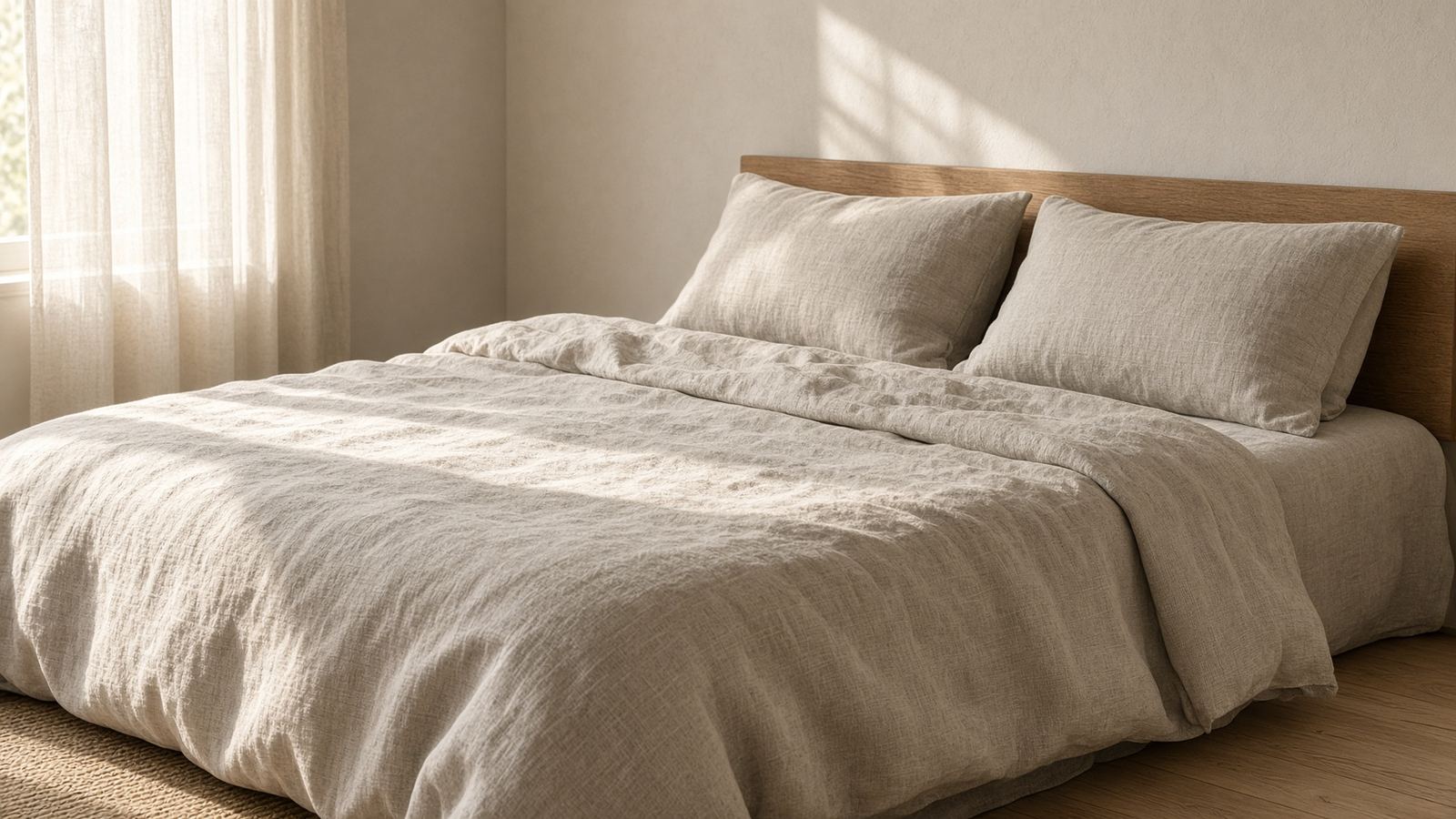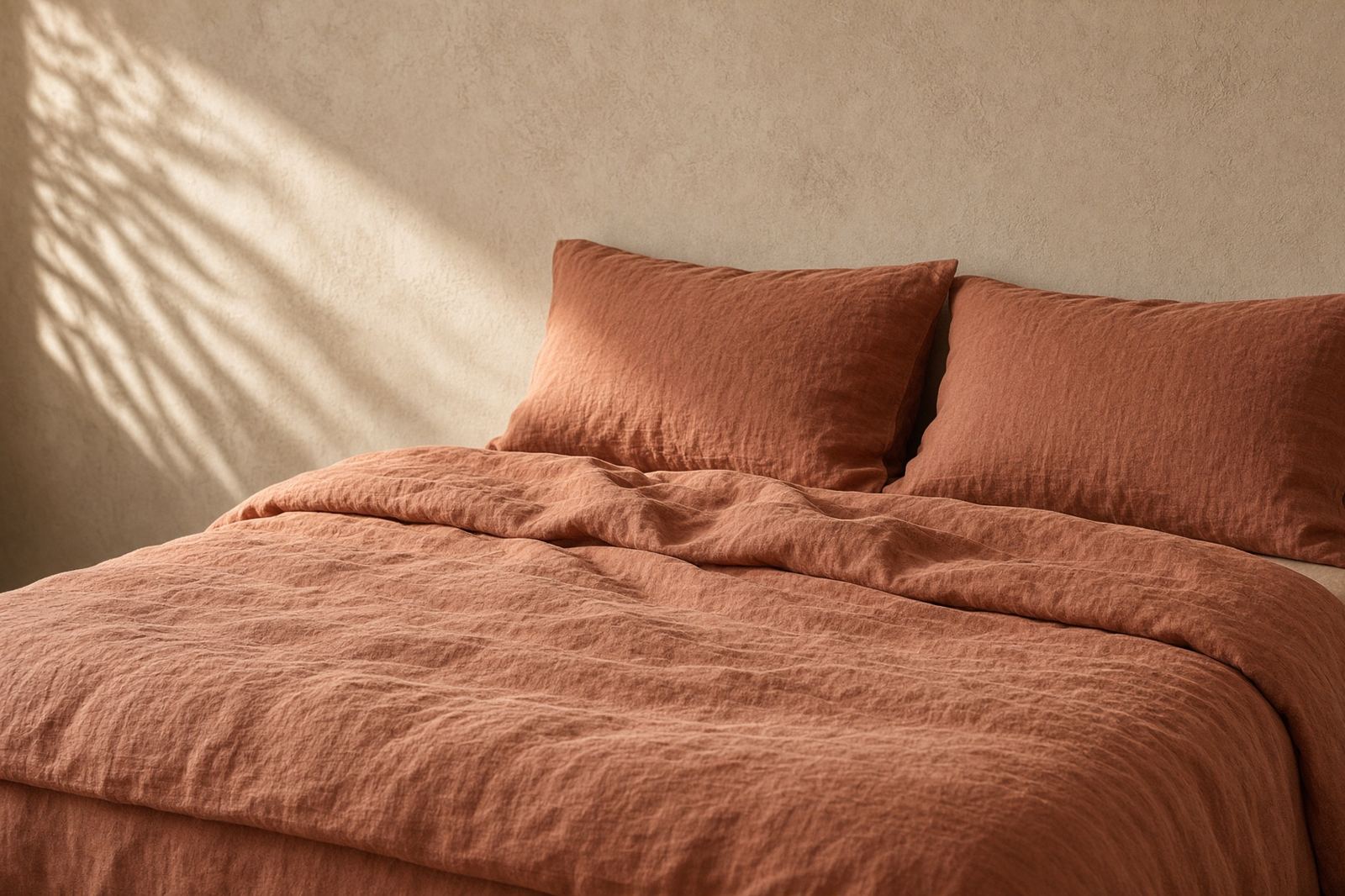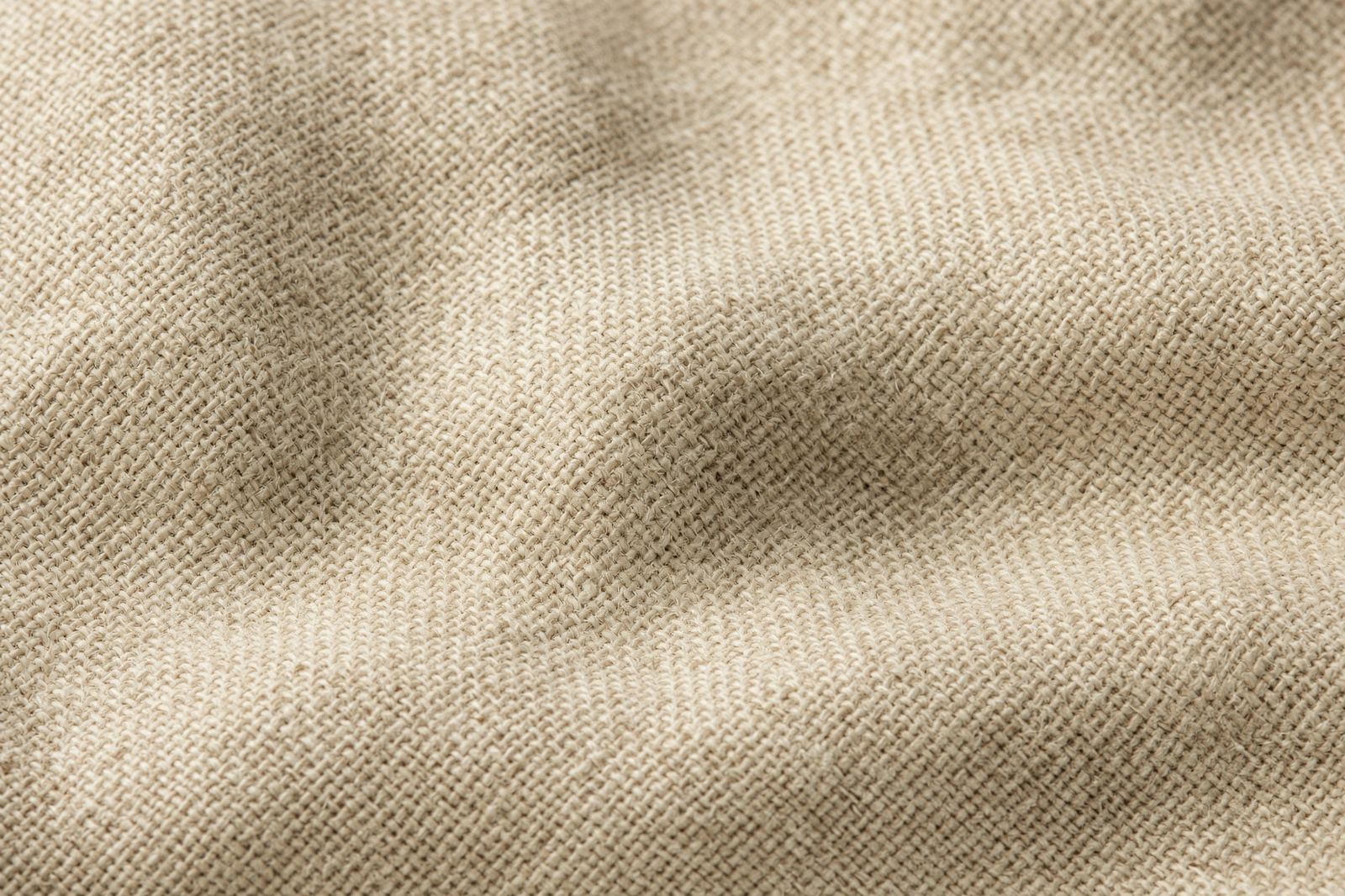
Flax breathes because the fiber is irregular and the weave is not sealed. Air moves. Moisture moves off your skin instead of filming there. That is the whole cooling story. There is no ice-tech yarn required, and the ice-tech yarn is often polyester.
What actually makes a bed hot
- A heavy GSM sold as a luxury upgrade.
- A duvet you do not need in July.
- Sateen or microfiber that feels cool for thirty seconds and then clings.
- A mattress protector that is a plastic sheet. Use a cotton or linen-friendly protector if you need one.
Humidity is its own problem
Linen wicks, but a damp room still needs the sheets dried all the way before they go back on the bed. In sticky weather, wash smaller loads and give the cloth air. A fan on a linen bed does more than a “cooling” thread-count claim.
Who it suits
- Sleepers who kick off cotton sateen
- Rooms without all-night air conditioning
- Summer, or Florida-style humidity year round
On this guide
Is linen better than bamboo for heat?
Often, yes, over a full night. Bamboo viscose can feel sleek at first and then limp. Linen keeps a drier hand. Read the label: some “bamboo linen” is viscose, not flax.
What GSM is too light?
Under about 140 GSM, linen can feel flimsy and show the mattress. If you sleep very hot, try one light set before you buy two.