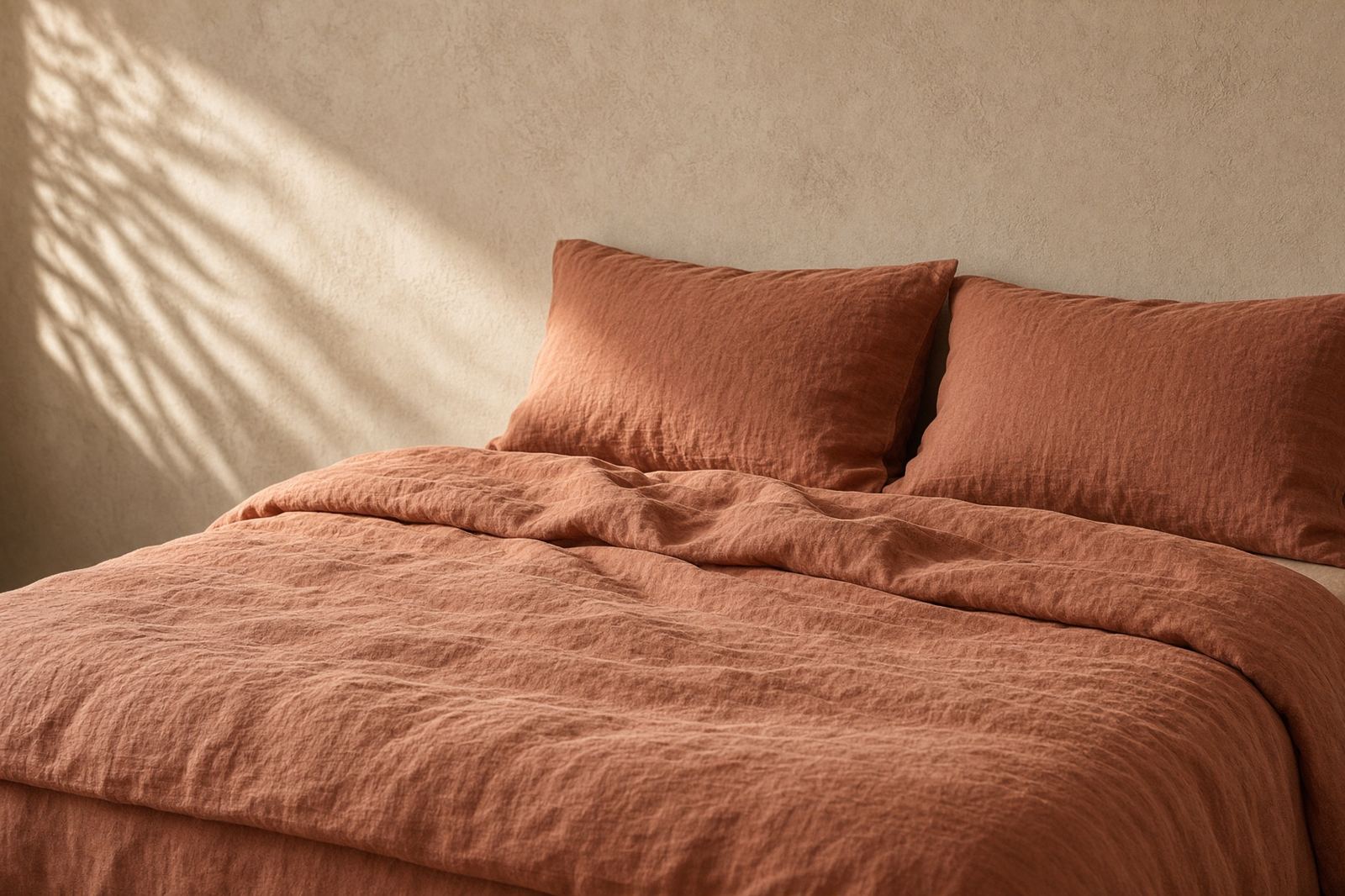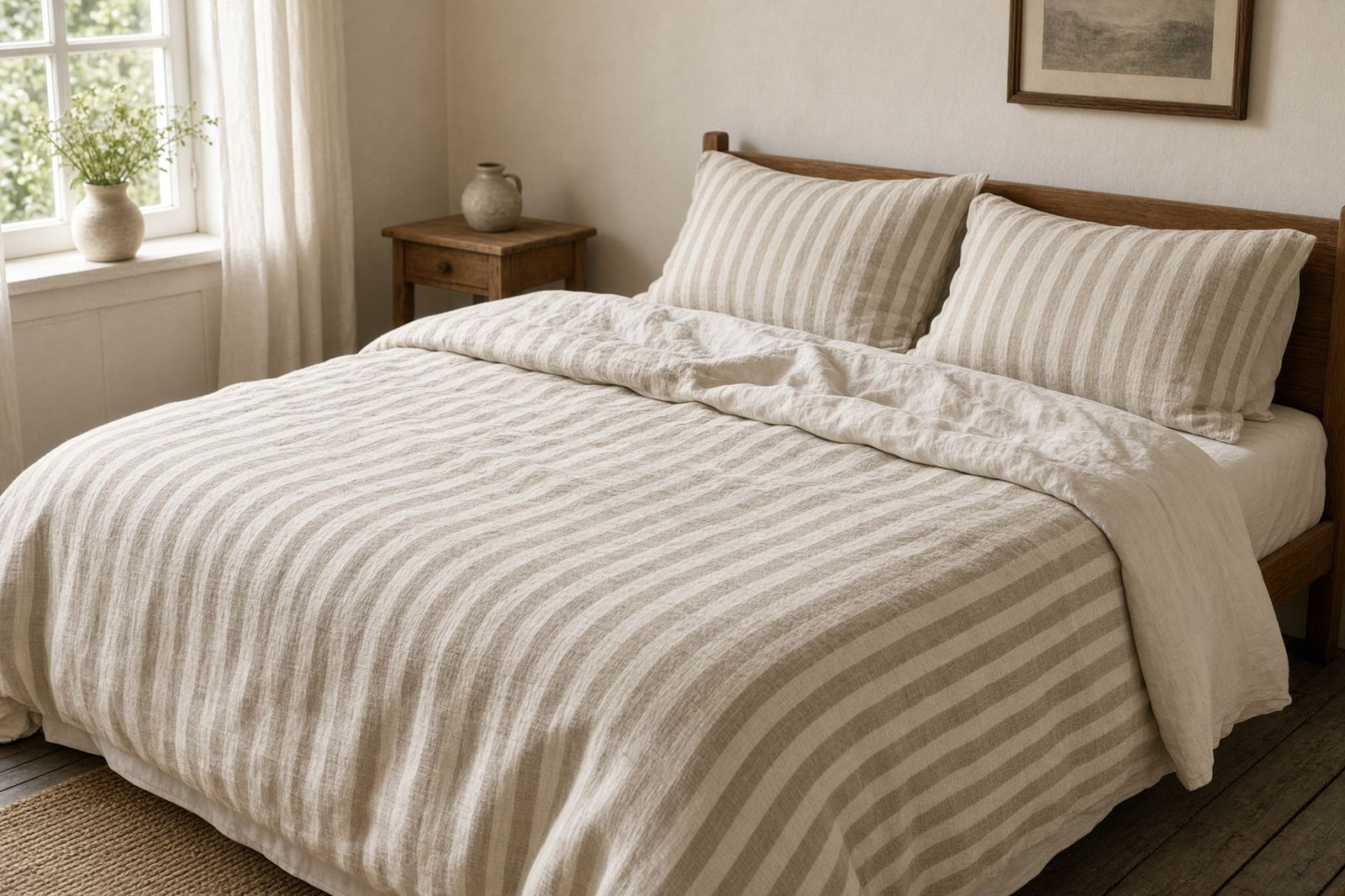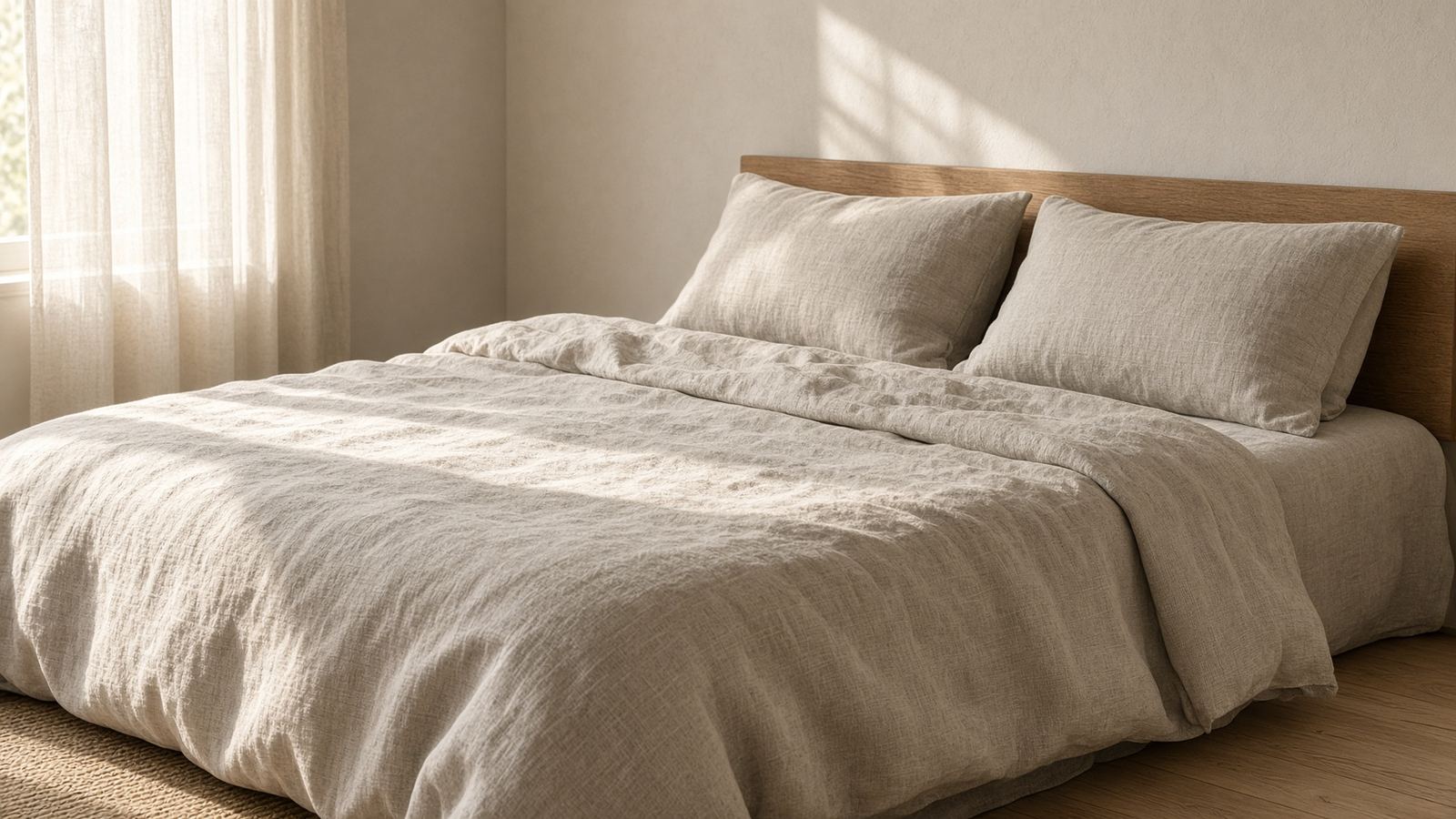
Natural flax is the color linen already is before anyone dyes it. It photographs warm, it wears quieter than pure white, and it makes the wrinkles look like a choice. Stonewashing is what keeps that first night from feeling like a tablecloth.
What “stonewashed” actually means
The cloth is washed hard at the mill so the fibers relax before they reach you. You give up a little of the crisp, papery hand of raw linen. You gain softness, a matte surface, and less surprise shrinkage. Good listings say stonewashed or pre-washed and still tell you the fabric may relax another few percent in your machine.
Weight, not thread count
Thread count is a cotton game, and a sloppy one. Linen is sold by grams per square meter. A natural set in the 160–185 GSM band is the all-purpose weight: light enough for a warm bedroom, substantial enough that you do not see the mattress through the flat sheet. Under 150 GSM can feel papery. Over 200 GSM starts to sleep warmer and costs more to dry.
- Ask the listing for GSM. If it is missing, treat “hotel weight” as marketing.
- European flax (France, Belgium, the Netherlands) is a useful origin clue. It is not a magic word if the rest of the spec is blank.
- OEKO-TEX Standard 100 means the finished cloth was tested for harmful substances. It does not mean organic.
GETLINEN does not stock this colorway. The shop button opens current linen bed sheet sets on Amazon so you can compare fiber, pocket depth, and today’s price.
Who it suits
- A first linen set
- Hot sleepers who still want some drape
- Rooms that are not all-white
On this guide
Will natural linen look dirty?
Oatmeal hides shadow and rumple better than optic white. It will still show a real stain. Treat spills before they set, the same as any pale cloth.
Does stonewashed linen still wrinkle?
Yes. Wrinkle is the weave, not a defect. Stonewashing makes the wrinkles softer and more even. If you want a smooth hotel bed, linen is the wrong cloth.