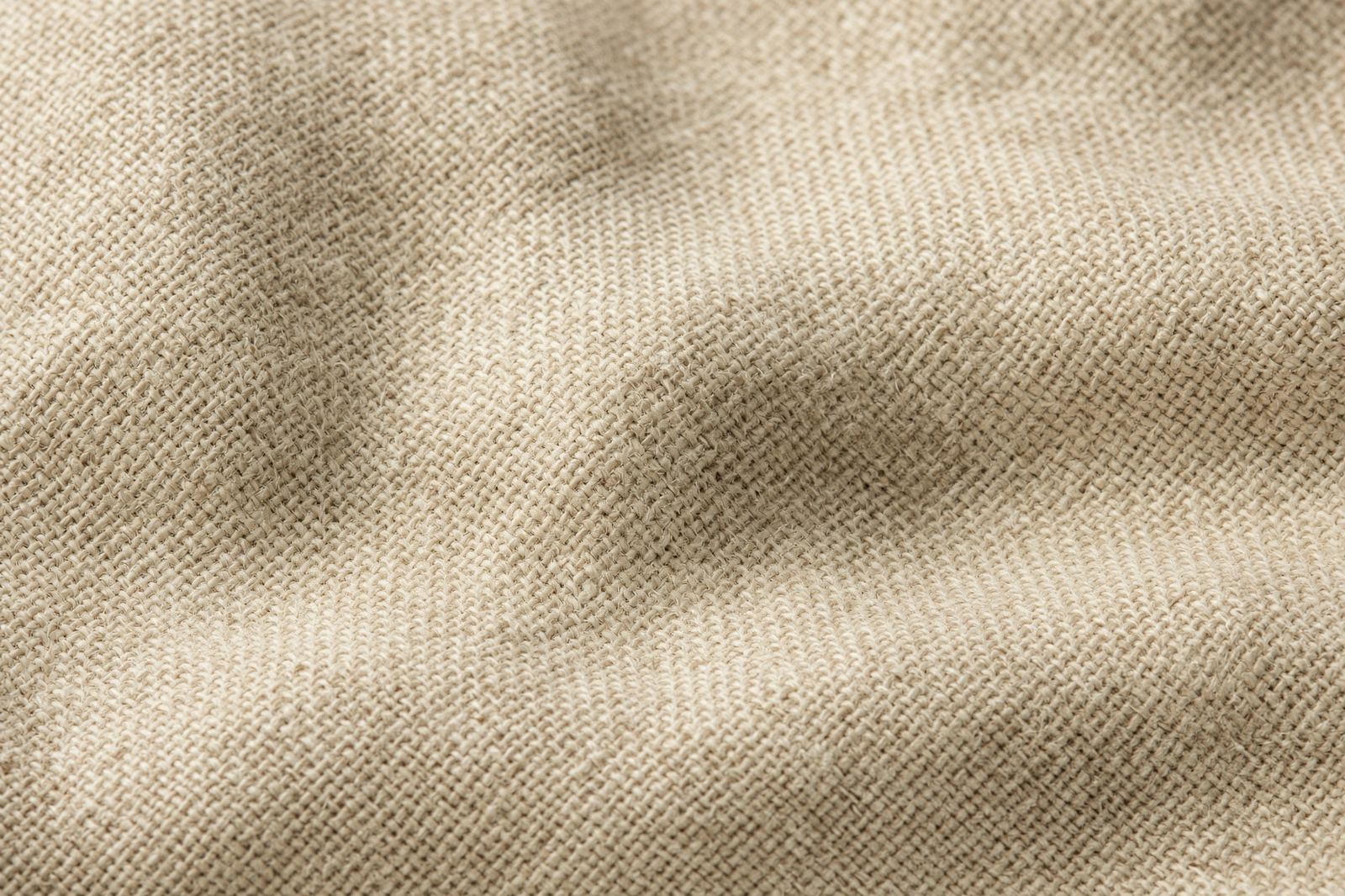
People say linen is cooling as if the cloth had a motor in it. It does not. Flax just refuses to seal up. The yarns are uneven, the weave has little gaps, and moisture can leave your skin instead of sitting there as a film. That is enough to change a hot night.
The fiber, briefly
Linen is flax. The same plant family that gives linseed. Long fibers are spun into yarn that stays strong when it is wet, which is why linen survives laundry that would humble a delicate knit. Those yarns are not identical the way polyester filament is. The slubs you see are thicker bits of fiber. They keep the cloth from lying on you like a sheet of paper.
Weight beats the snowflake icon
A 220 GSM linen sheet is still linen, and it can still sleep warm, because there is simply more cloth. For a hot sleeper, look around 140–170 GSM. For an all-year bed in a mixed climate, 165–190 GSM is the useful middle. Anything sold as “cooling” without a fiber percentage and a weight is a slogan.
The rest of the bed has a vote
- Sateen on top of linen cancels the experiment.
- A thick quilt in a warm room cancels it faster.
- A waterproof protector that feels like a tarp puts a wall under the sheet. Moisture goes nowhere.
- A fan plus a light flax sheet beats a gadget pillow.
If you want to test the claim, change one thing: the sheet. Keep your mattress, skip the heavy duvet for a week, and use a real 100% linen set. Then decide. The Amazon search linked from every page on this site is the fastest place to line those sets up side by side.